
#1: America's Most Trusted
Pause and Resume
Real Support, 7 Days a Week
Fastest Allowed by Law
No Hidden Fees

◉ How Dangerous is Driving Under the Influence of Marijuana?

In the United States, and on this blog, we spend a lot of time talking about the dangers of drunk driving, particularly around holidays like the Fourth of July and New Year’s, and with good reason – about one-third of total traffic fatalities involve alcohol impairment.

However as states have begun to legalize marijuana for medical or even recreational purposes in the last few years, driving while under the influence of marijuana is becoming an increasingly important topic.

It’s a common myth that driving under the influence of marijuana isn’t all that dangerous. But how does marijuana really affect the ability to drive safely?

Marijuana Use Impairs Driving Performance

While the National Highway Traffic Safety Administration reports that marijuana-impaired drivers are sometimes able to “pull themselves together” to concentrate briefly on simple tasks, or may try to make up for their impairment by driving more slowly or cautiously, driving high is by no means safe.

According to the NHTSA, marijuana has been shown to impair driving performance significantly for 1 to 2 hours following use, and residual effects have been reported up to 24 hours after use. These impairments are moderate in low doses and severe with high doses, chronic use, and in combination with alcohol.

Reported impairments include:

  • Inability to concentrate and maintain attention
  • Difficulty performing divided-attention tasks
  • Reduced hand-eye coordination
  • Distortion of time and distance
  • Increased evaluation, decision, and reaction times
  • Sleepiness

Even a moderate impairment can prevent drivers from responding quickly to unexpected hazards and maintaining the high level of attention needed for safe driving.

The National Organization for the Reform of Marijuana Laws (NORML), which promotes the legalization of the responsible use of marijuana, recognizes this danger in its Principles of Responsible Use, arguing that:

“The responsible cannabis consumer does not operate a motor vehicle or other dangerous machinery while impaired by cannabis, nor (like other responsible citizens) while impaired by any other substance or condition, including some medicines and fatigue.”

Limited Data Available on Marijuana-Impaired Crashes and DUIs

We already have a wealth of information on how alcohol, drowsiness, and even distraction affect our risk of being in a crash, so it may seem surprising that researchers do not yet have a clear picture of how many crashes or DUI convictions involve marijuana.

Law enforcement, court systems, and researchers have significant challenges to overcome in obtaining and interpreting this information:

  • Standard field sobriety tests, which are 90% effective in identifying drunk drivers, only correctly identify 30% to 50% of marijuana-impaired drivers, according to the New York Times.
  • Evaluations by specially trained Drug Recognition Experts are accurate but must be completed after an arrest, not at the scene of a traffic stop.
  • Chemical tests of blood and urine are available but do not reliably predict how impaired a driver is. Drivers may test positive for marijuana days or even weeks after use.
  • Many law enforcement and court record-keeping systems do not include whether an impaired driver was affected by alcohol, drugs, or both. The NHTSA has strongly recommended that these systems be updated to provide for more accurate monitoring of DUI cases.

As detection methods and reporting policies become more accurate, we can expect our understanding of this issue to become much clearer.

Los Angeles is already testing out a saliva swab drug test that can be used at the time of a traffic stop. Officials hope that having a quick and effective method to detect the presence of drugs will deter people from getting behind the wheel while under the influence of any substance.

Looking for More Information?

While the data is limited, researchers are still studying the issue! Take a look at the findings at the links below.

  • A study by Columbia University released this past January found that the proportion of fatally injured drivers who tested positive for marijuana tripled from 1999 to 2010, from 4.2% to 12.2%. This may indicate that marijuana-impaired driving is playing an increased role in fatal crashes. The study is based on data from six states where toxicological testing is routinely performed on drivers involved in fatal car crashes.
  • In Washington, 25% more drivers tested positive for marijuana in 2013, the first full year after the state legalized the drug than in 2012. However, there was no overall rise in DUI arrests and no significant increase in crashes.
  • In Colorado, an increased proportion of drivers involved in fatal crashes tested positive for marijuana after 2009, when medical marijuana was legalized, than in the period before legalization. The study did not reveal whether the drivers were found to be impaired at the time of the crash, or whether they were at fault in the crash, so the results may only reflect an increase in use.

Curious about laws on marijuana and driving in your state? Check out NORML’s state-by-state list of drugged driving laws.
It is well-known that drunk driving and texting while driving cause accidents. Many public announcements have been made in an effort to reduce the number of drivers under the influence and to diminish cell phone use while driving; laws exist and those caught are punished. It is not as commonly thought that health affects driving too. At Traffic School Online we realize that poor health conditions can also cause crashes. Here are some health issues to be aware of before you or a loved one gets behind the wheel.

Vision

When you get your permit and renew your license you take an eye test. Vision is obviously an important part of driving. You need to clearly see the road, signs, lights, other vehicles, and pedestrians. Therefore, if vision changes occur it is important to stay off the road until they are corrected. Maybe it is something simple like a need for new prescription glasses. Many older adults find their vision worsens and they need cataract surgery. Other common vision issues that can affect driving are glaucoma and macular degeneration. If you have any concerns about your own vision or the vision of a loved one, consult an eye doctor.

Diabetes

Side effects of diabetes include feeling sleepy, dizzy, or confused. All three are harmful when driving. In extreme cases, someone with diabetes can lose consciousness or have a seizure. Make sure diabetes is well controlled to continue driving safely. Any concern that blood sugar is too high or too low needs to be addressed immediately. Until the issue is resolved, driving should be avoided.

Seizures

Seizures pose an obvious threat to driving. Someone experiencing a seizure would no longer be in control of the vehicle. According to the Epilepsy Foundation, the states have different regulations when it comes to drivers who have a history of seizures. In most cases, they require a certain amount of time to pass after a seizure before the driver is allowed behind the wheel again. If the state requires 1 year that means the driver must be seizure-free for an entire year before driving.

Alzheimer’s

People with Alzheimer’s disease are not only prone to getting lost, but they also tend to get confused which can be an issue when driving. This can lead to them pressing the gas when they are meant to break or going through a red light instead of stopping. Unfortunately, many dementia patients do not realize that they are no longer safe drivers so family intervention may be required to keep them off the road.

Arthritis

Although most people with arthritis are still able to safely drive those with severe symptoms may not be able to continue driving. If motion is limited it may be difficult to apply the brake and gas pedals. Turning the steering wheel smoothly may not be possible. If movement of the hands, feet, or neck is limited due to arthritis, it may not be wise to continue operating a vehicle.

Cold and Flu

Although it may seem like driving shouldn’t be impacted by the common cold or the flu you may want to reconsider. It is hard to focus on the road when you are excessively sneezing or feeling sleepy due to a fever. If you have taken any over-the-counter medications to combat the symptoms of a cold or flu, that may make you even more drowsy or dizzy. If you are ill, it is best to stay home and rest until you are well enough to resume normal activities.

Before you get in the car to drive, consider your health. Yes, it is wise to abstain from drinking and driving as well as texting and driving. It is also wise to stay out of the driver’s seat if your health is affected in a way that may impair your ability to drive safely. If you are worried about a loved one driving in poor health, talk to them about your concerns and help keep the roads safe.

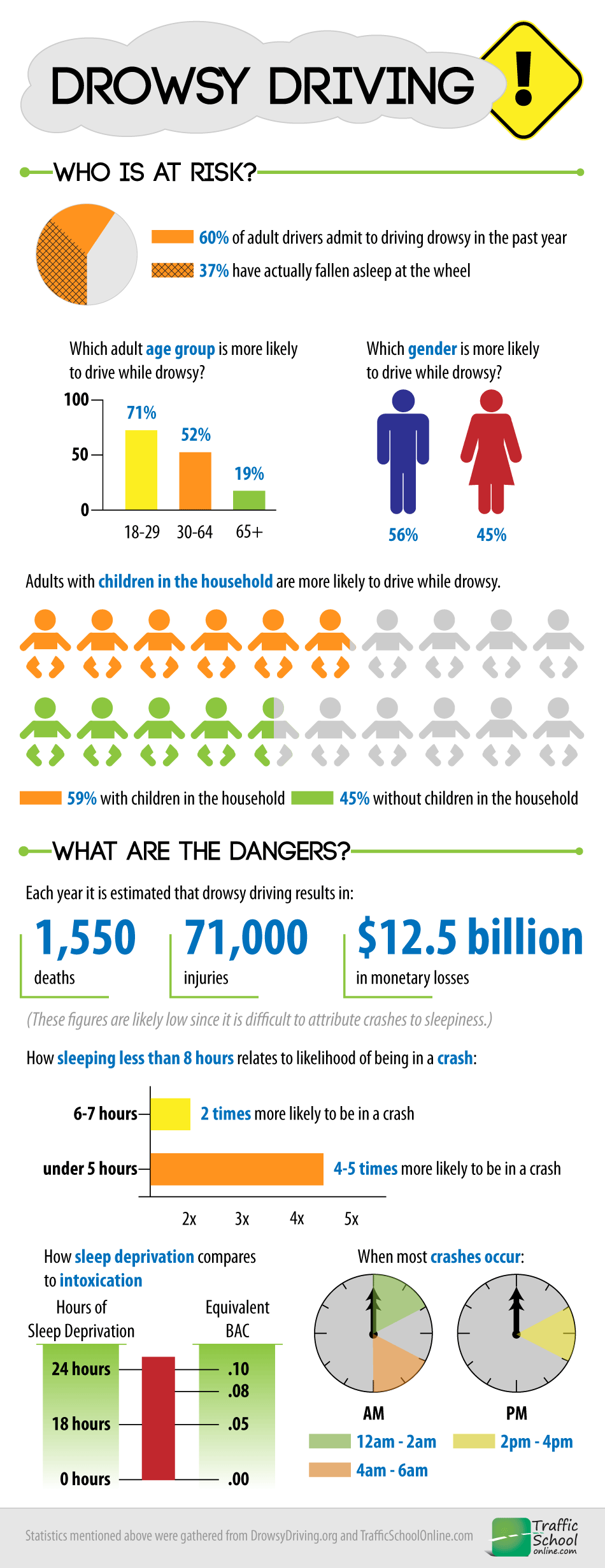
Drowsy driving can be much more dangerous and occurs more often than most people realize. Driving while drowsy can even become just as dangerous as driving while intoxicated.

Click on the infographic below to view a larger version.

Drowsy Driving Infographic

Everyone can be at risk of driving while drowsy. 60% of adult drivers actually admit to driving drowsy in the past year. 37% have actually fallen asleep at the wheel. The 18-29 year old age group is most likely to drive while drowsy and men are slightly more likely to drive while drowsy than women. Adults with children in the household are more likely to drive while drowsy.

Each year it is estimated that drowsy driving results in 1,550 deaths, 71,000 injuries, and $12.5 billion in monetary losses. And keep in mind that these figures are likely low since it is difficult to attribute crashes to sleepiness.

Sleeping only 6-7 hours makes it two times more likely to be in a crash and sleeping under 5 hours makes it 4-5 times more likely. Most crashes occur between 12 am – 2 am, 4 am – 6 am, and 2 pm – 4 pm.

New Year’s has a bad reputation as the most dangerous holiday to be on the road. While more total fatalities actually occur during other holiday periods, an average of 42% of New Year’s traffic fatalities are alcohol-related – a higher percentage than any other holiday period.

Ultimately, it’s each of our responsibility to decide not to drink and drive, and to encourage others to do the same. But it’s not always easy to speak up! Here are some tips to help you think through how you can help friends and family members make safe driving decisions this holiday season.

Make a Plan

Often, planning ahead can prevent drunk driving from ever becoming an issue at your social event.

  • Designate a driver before the drinking starts.
  • If you’re not sure everyone will be willing to stick to the plan, consider having everyone give up their car keys in advance.
  • Choose to take a cab or public transit in advance. Some cities offer free public transit on New Year’s Eve.
  • Discuss where everyone in your group will be staying that night.
  • Look into safe ride programs in your area.

But sometimes situations arise that you hadn’t anticipated. Maybe you meet up with people who didn’t arrive with you and don’t have a safe way to get home, or maybe someone wants to change the plan at the last minute.

In these situations, we know we’re supposed to speak up – but that can be hard to do!

You’re Not the Only One Worried

When somebody who seems drunk is getting ready to head out to their car and leave an event, and nobody else seems concerned, it’s tough to bring yourself to say anything about it.

While it might seem like you’re the only one thinking about it, others in your group are probably experiencing a similar dilemma. Think about how you’d feel if one of them spoke up at that moment. Relieved? Grateful? Others in the group will probably feel the same way, and may even voice their support and help make alternative suggestions.

What Will You Say?

Sometimes a simple “Hey, let me call you a cab” or offering them a couch to sleep on is enough to deter them. But other times, the person might continue to insist on driving. They might say things like…

  • I’m fine now.
  • It’s just a short drive.
  • I never get pulled over.
  • I won’t hurt anyone.
  • I’ve done it before and it’s always fine.
  • You don’t know me, you can’t tell if I’m drunk or not.

You can

  • Suggest a more appealing alternative. Offer to wait for the cab with them, or suggest an activity you can do if they stay at your house. If others are also staying, point that out!
  • Have a private conversation. If you’re close friends with the person, you may have better success taking them aside and speaking with them privately. If you don’t know them well, try discreetly asking their friends to talk to them.
  • Be as non-confrontational as you can. Embarrassing the person will probably make them less willing to back down.
  • Remind them that you care. You don’t want them to get in trouble with the law or hurt themselves or others. Is the convenience of driving home really worth the possible consequences?
  • Enlist a friend. If you’re not having success convincing them by yourself, grab a friend of yours or theirs to help you – it’ll be harder for them to say no to more than one person
  • Remind them of how their decisions impact you or others. Many states have social host laws, which make a host who furnishes alcohol to guests liable for some or all guests’ actions. Be familiar with your state’s laws and know whether you or your host could be held responsible for damage or injury caused by a drunk driver leaving your gathering.

But if they won’t listen, what will you do next?

Last Resorts

Many resources suggest taking or hiding the person’s keys, and in particular, suggest doing so while they’re distracted so they’ll think they just misplaced them. But if the person is already trying to leave, this may not be possible.

This Mothers Against Drunk Driving brochure suggests letting the air out of their tires, or even moving the car yourself if you have not been drinking. However letting the air completely out of the tires could damage the wheels, making you liable for the damage, and moving the car without the owner’s permission could be considered unauthorized use of a motor vehicle.

Instead, we suggest being ready to report the drunk driver to your local police department. You can let them know that you don’t want to have to call the police, but that you will if they get behind the wheel.

Be prepared to follow through. Whether you call 911, your local police department, or a state hotline, you’ll need to provide…

  • A complete description of the vehicle. Include the make, model, and color of the car, and the license plate number if you have it available.
  • The location of the vehicle, including a street name and a cross street.
  • The vehicle’s direction of travel.

Don’t take any action that could compromise your own safety, like trying to detain the driver or stop the vehicle, and never get into a vehicle with a drunk driver.

Have a safe and happy New Year!